


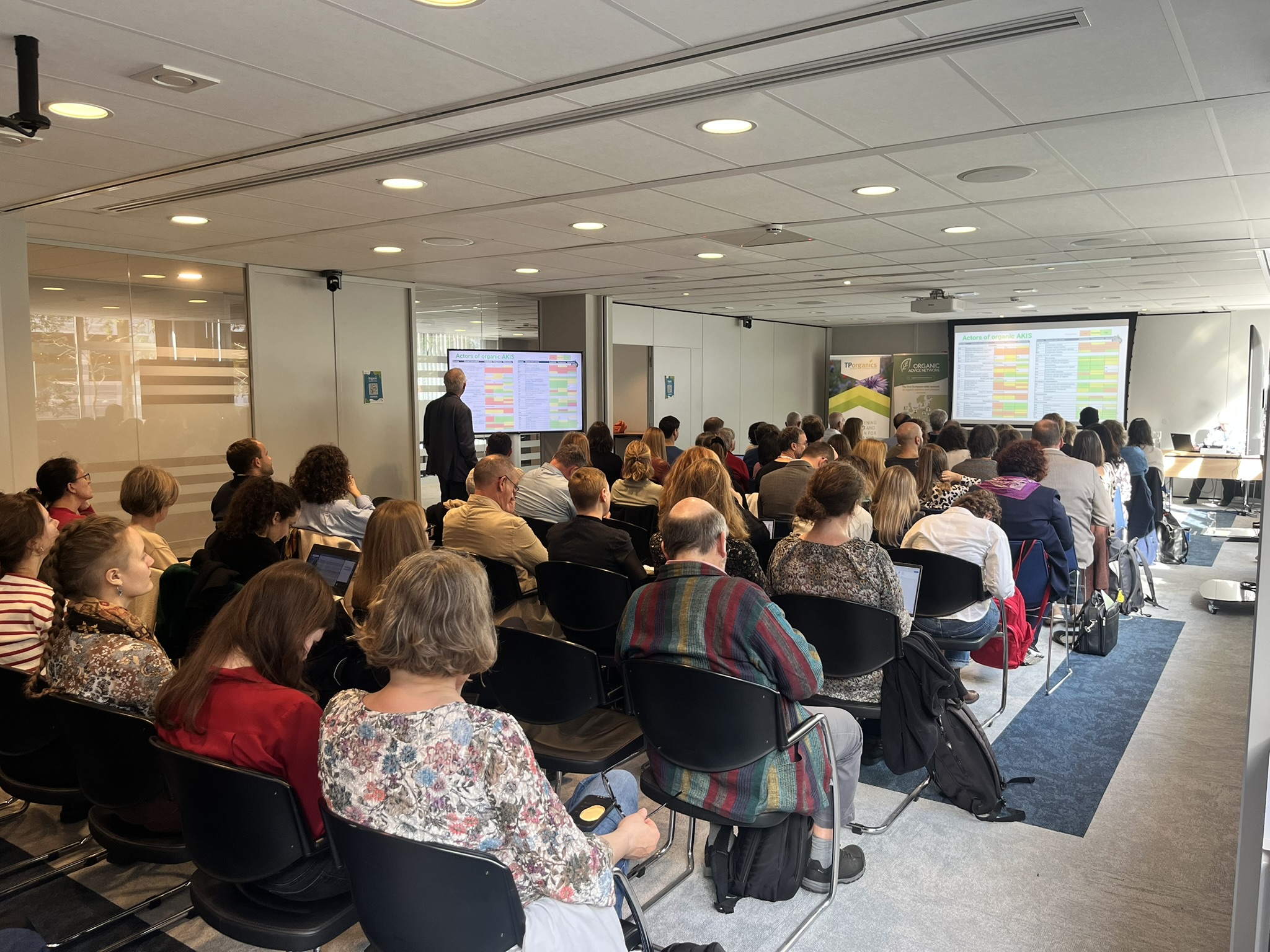
The final conference of the OrganicTargets4EU Project was already a month ago! We were thrilled to host the conference jointly with the 2025 Organic Innovation Days, TP Organics’ annual public event and the only EU event focused on organic and agro-ecological research and innovation.
Wednesday, 5 November, was dedicated to the project’s scientific results, distilling policy recommendations best suited to achieving the EU’s organic targets. Titled “Achieving The EU’s Organic Goals — Progress, Impacts, & Policy Recommendations,” this interactive conference validated findings and policy recommendations to show the path forward to reach the organic targets of the EU (to get 25% of agricultural land under organic farming and a significant increase in organic aquaculture by 2030) in view of the expected scenarios.
The sunny day at ACE Events kicked off with a warm welcome to all 74 participants from Eduardo Cuoco, Director of IFOAM Organics Europe, reflecting on the policy context and why the project results come at the right time.
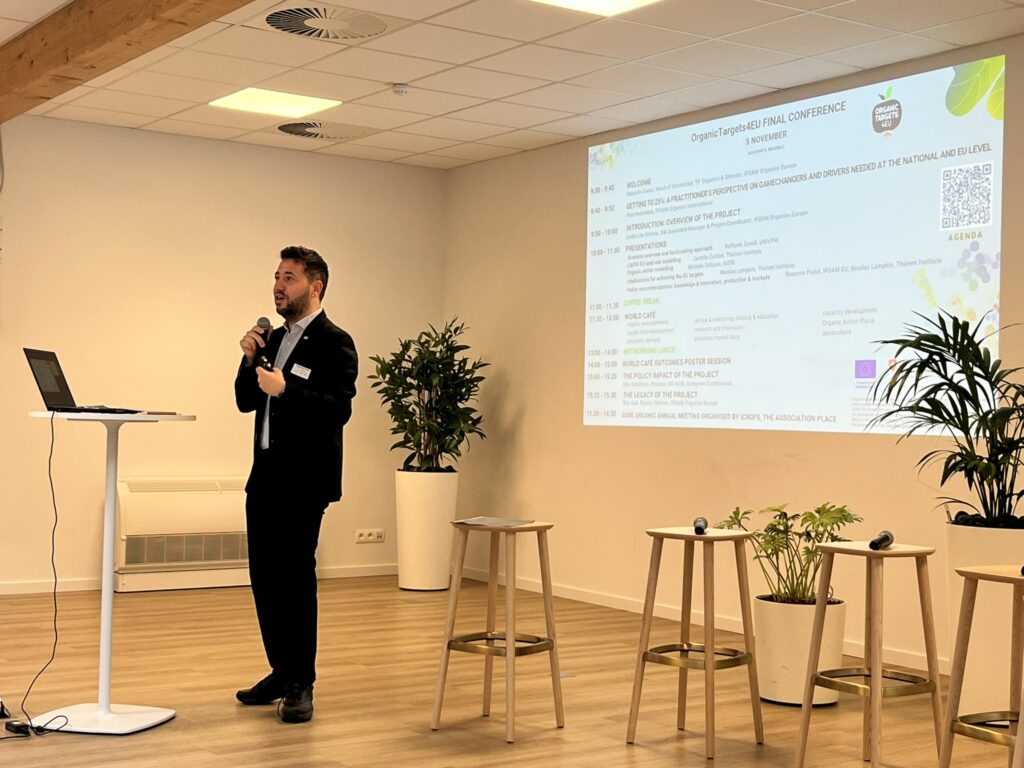
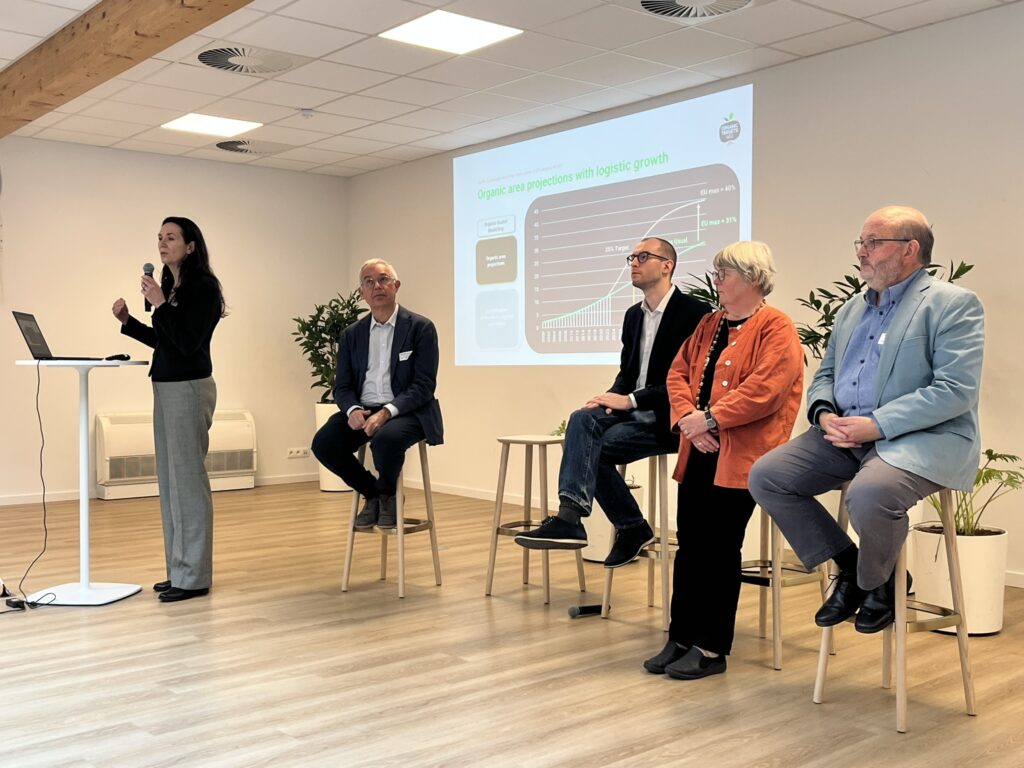
Paul Holmbeck, Board Member at IFOAM International, opened with an energising presentation on best practices at national level to reach the EU goal, highlighting the importance of building organisational capacity to drive change in the market and of working with farmers.
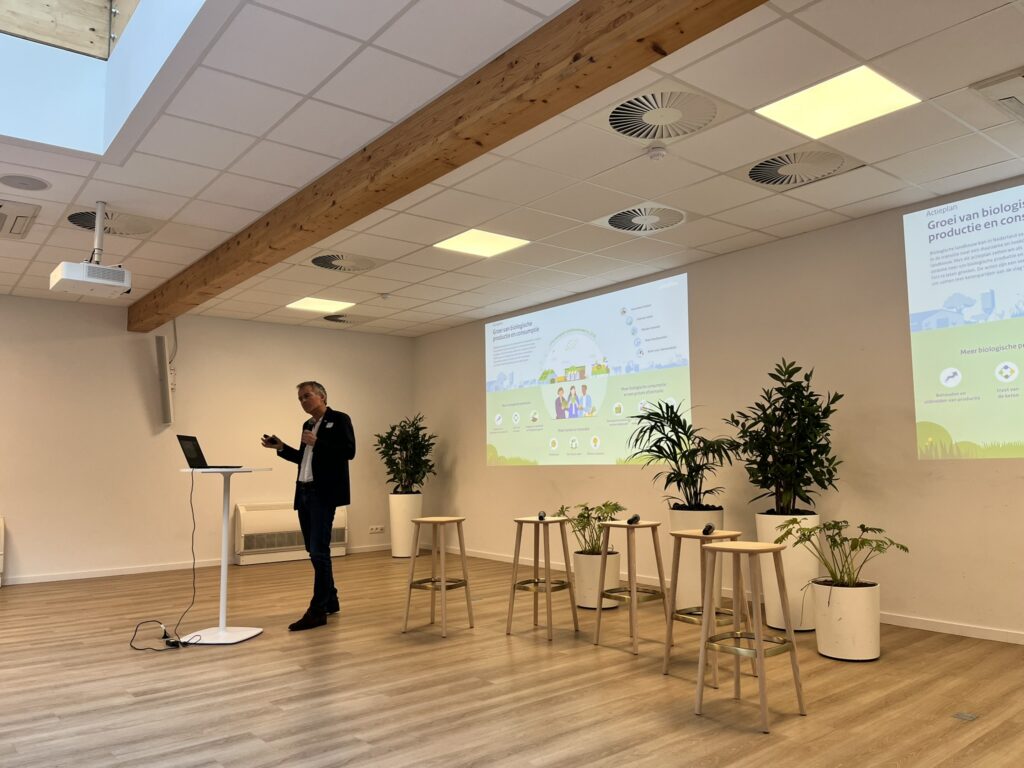
Ambra De Simone, Research & Innovation Associate Manager at IFOAM Organics Europe and Project Coordinator, presented the OrganicTargets4EU project and reflected on its participatory approach. In total, over 300 external stakeholders, including researchers, funders, farmers, policymakers, and value chain actors, were engaged in research, dialogue, and co-creation activities over 3 years. This month, 18 people from the Commission were consulted to discuss the policy recommendations in online interviews.
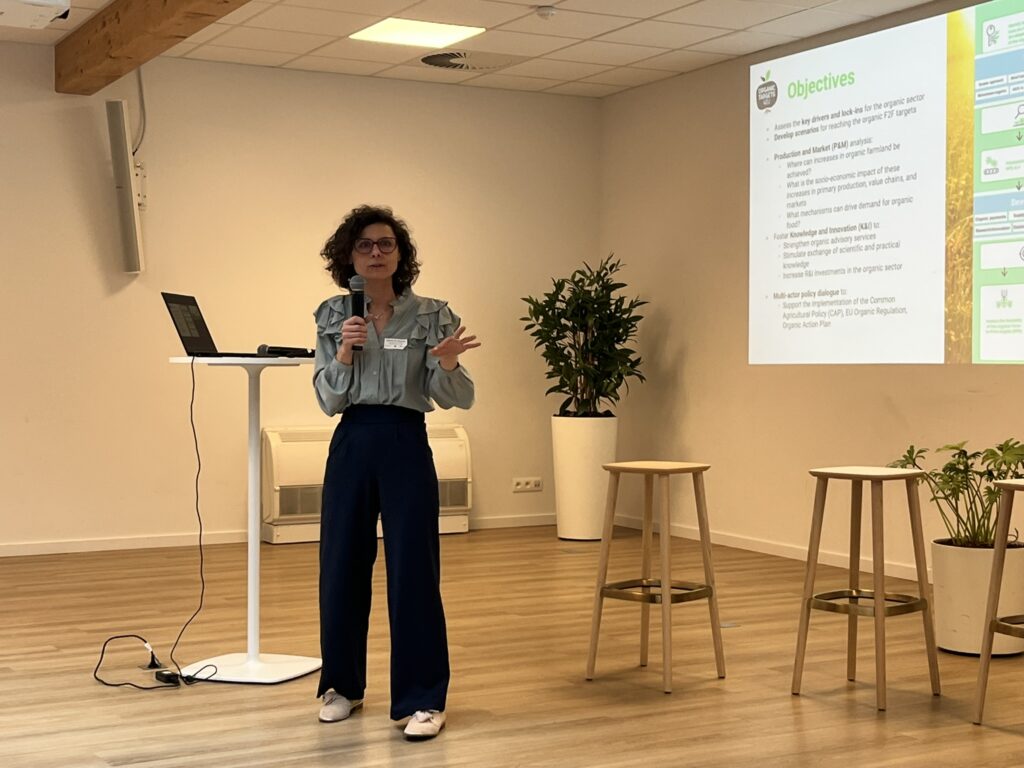
A round of presentations from project partners gave a deep dive into what OrganicTargets4EU delivered. Raffaele Zanoli (Universitá Politecnica delle Marche) presented the four scenarios drawing the paths towards achieving the organic target. Jarmila Curtiss (Thünen Institute) and Michele Schiavo (IDDRI) presented the CAPRI EU land use modelling and the organic sector modelling, respectively, which were employed using the alternative future scenarios. Finally, Susanne Padel (IFOAM EU) and Nicolas Lampkin (Thünen Institute) presented the implications for achieving the EU targets and policy recommendations developed from the research.
As the core of the event, participants engaged in a dynamic World Café covering nine key themes, to review and provide feedback on the policy recommendations developed and test them against the 4 scenarios in relation to the achievement of the Farm2Fork targets for organic. The outcomes of the discussions will determine the final policy recommendations and scenario narratives, published in December 2025.
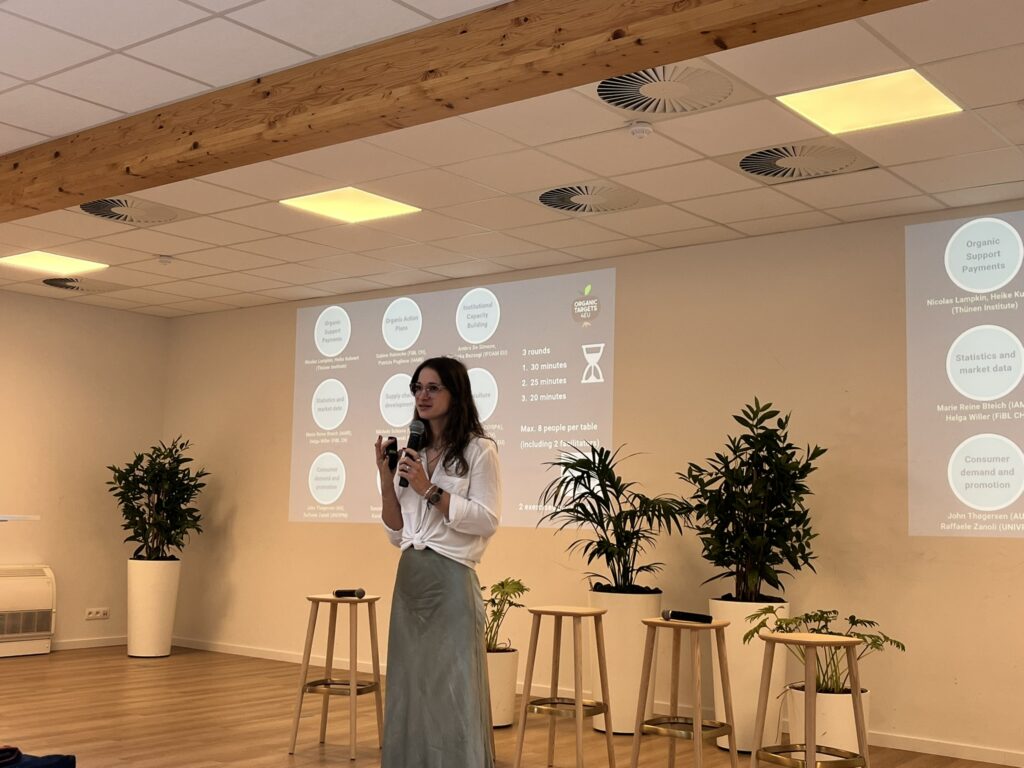
The World Café session emphasised the importance of collaboration, knowledge exchange, and targeted support to achieve EU organic goals. If you participated in the event or other project activities, we invite you to complete this brief stakeholder engagement survey to tell us about your experience with OrganicTargets4EU!
After lunch, Gijs Schilthuis, Director at DG AGRI, European Commission, intervened on the policy impact of the project, highlighting how evidence-based insights can support the EU’s organic strategies and inform future policymaking. The Commission representative reflected on:
- Organic In The Context Of Commissioner’s Vision For Agriculture & Food
- The Progress Of The Organic Sector
- The Future Organic Action Plans
- Advice For Further Development Of The Organic Sector & Movement
- How The Commission Will Capitalise On Project Results
- The Commission’s Perspective On Organic Research & Future Financial Support For Organic R&I
In closing, Eric Gall, Deputy Director at IFOAM EU, reflected on the role of the project in strengthening networks, building capacity, and fostering long-term transformation in the organic sector.
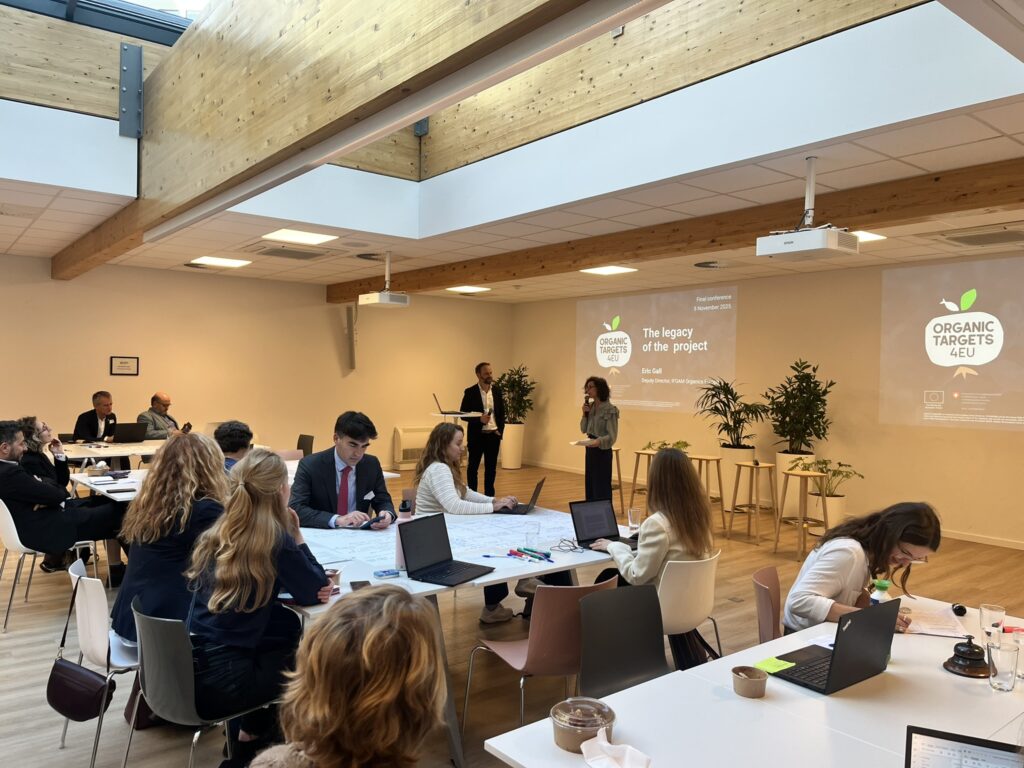
And what’s next? As OrganicTargets4EU concludes, it leaves a lasting legacy demonstrating the socioeconomic impacts of reaching the EU’s 25% target for organic. It is one of countless projects that provide invaluable scientific evidence on the benefits of organic—proving policymakers that organic is the way forward.
This slide deck from the day is for your information only, not to be disseminated. Any use must be cleared by the authors. Stay tuned for the final OrganicTargets4EU policy recommendations and scenarios for the development of the organic sector, to be released this year.
On Tuesday, 4 November, the Organic Innovation Days, with this year’s theme “Research & Innovation for organic food and farming: triple lead for sustainable food systems,” featured the official launch of our new Strategic Research & Innovation Agenda (SRIA) for Organics and Agroecology, results from the OrganicTargets4EU project, and the award ceremony of the Organic Advice Contest organised by OrganicAdviceNetwork. Did you miss the Organic Innovation Days? Read our full recap here!